Explain the features of monopoly
A monopoly is a market structure in which a single seller controls the entire supply of a product with no close substitutes. Because of this dominance, the monopolist has significant control over price and output.
Key Features of Monopoly
1. Single Seller


-
There is only one producer or seller in the market.
-
The firm itself represents the entire industry.
-
Consumers must buy the product from this single firm.
Example: In some regions, electricity distribution may be provided by only one utility company.
2. No Close Substitutes
-
The monopolist’s product does not have close alternatives available.
-
Consumers cannot easily switch to another product.
Example: A patented medicine may have no direct substitute until the patent expires.
3. High Barriers to Entry
-
It is very difficult for new firms to enter the market.
-
Barriers may include:
-
Government licenses
-
Patents and copyrights
-
Huge capital requirements
-
Control over raw materials
-
Legal restrictions
-
These barriers protect the monopolist from competition.
4. Price Maker
-
A monopolist has the power to influence the price of the product.
-
Unlike firms in perfect competition, which are price takers, monopolies are price makers.
However, the monopolist still considers consumer demand when setting prices.
5. Large Market Power
-
The monopolist controls the supply of the product in the market.
-
This gives the firm significant market power and ability to influence output and pricing.
6. Price Discrimination (Possible)
-
A monopolist may charge different prices to different consumers for the same product.
Examples:
-
Student discounts
-
Airline ticket pricing
-
Movie ticket pricing
7. Profit Maximization
-
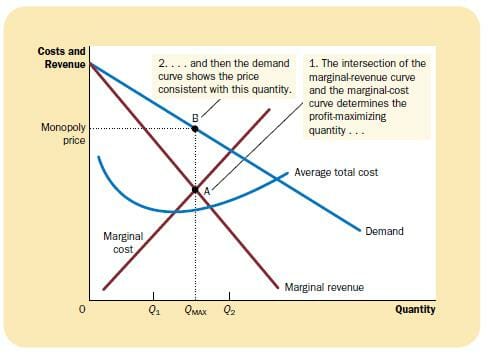
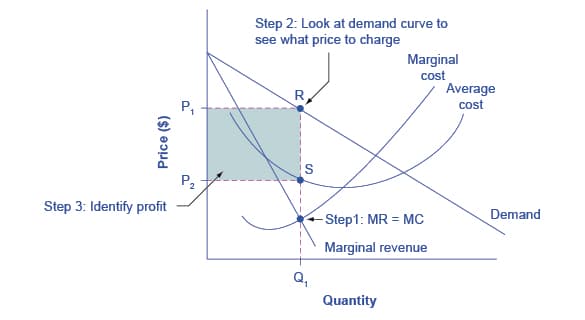
Like any firm, the monopolist aims to maximize profits.
-
The firm decides the price and output level where profits are highest.
? Conclusion:
A monopoly market is characterized by one seller, absence of close substitutes, strong barriers to entry, price-making power, and high market control, which allows the monopolist to influence market conditions.